Key Takeaways
- Thyroid nodules are extremely common. The American Thyroid Association notes that by age 60, roughly half of all people have one that can be found on exam or imaging.
- More than 90% are benign. About 5% of biopsied nodules turn out to be cancerous.
- Even when cancer is found, the outlook is excellent. The five-year relative survival rate for thyroid cancer is above 98%.
- Most nodules cause no symptoms and are discovered incidentally during imaging done for something else.
- Evaluation depends on ultrasound features, not size alone. A nodule around 1 to 1.5 cm with suspicious features is typically biopsied; a small, bland-looking nodule usually just gets monitored.
- Certain findings warrant prompt attention: rapid growth, hoarseness, difficulty swallowing, enlarged neck lymph nodes, or a history of head and neck radiation.
Few phrases raise a pulse faster than “we found a nodule.” The word itself sounds ominous, and most people hear it from a radiology report for a scan ordered for something else entirely, such as a car accident, a carotid ultrasound, or a neck CT.
Here is the context that usually does not come with the phone call. Thyroid nodules are among the most common findings in medicine. The American Thyroid Association notes that by age 60, about half of all people have a thyroid nodule detectable by exam or imaging, and more than 90% of them are benign.
That does not mean a nodule should be ignored. It means the right response is evaluation, not alarm. This post covers what nodules are, which features warrant concern, and what the workup involves.
What Is a Thyroid Nodule?
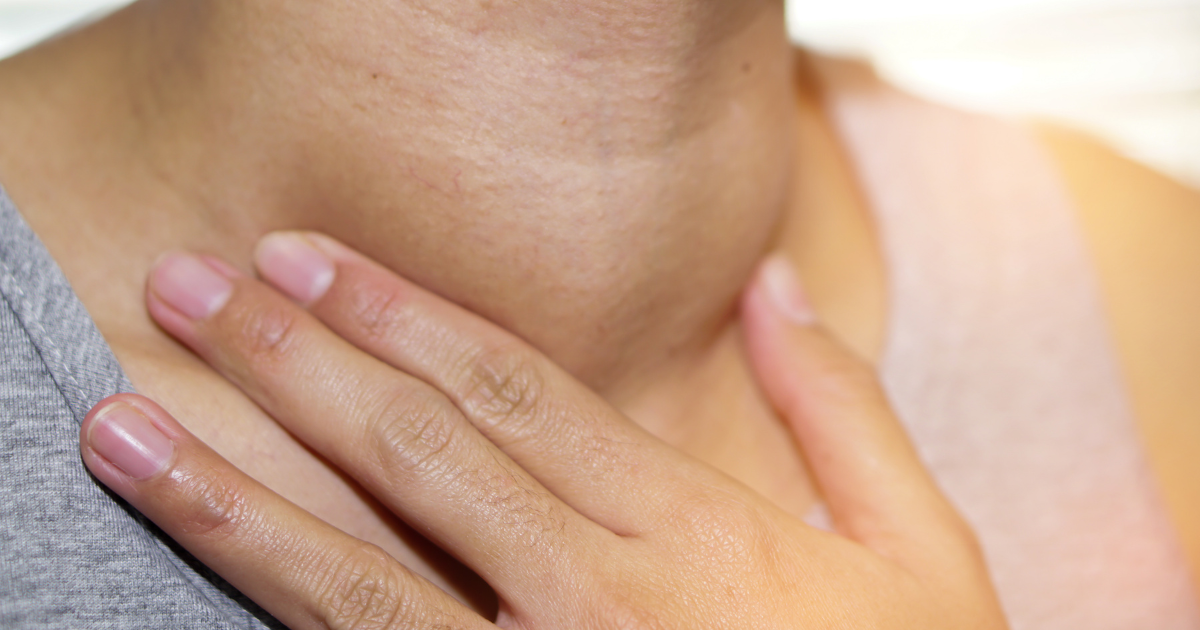
A thyroid nodule is a growth of cells within the thyroid, the butterfly-shaped gland at the base of the neck that regulates metabolism by producing hormones. Nodules can be solid, fluid-filled (a cyst), or a mix of both.
The number most patients want is this: approximately 5% of biopsied thyroid nodules are found to be cancerous. The overwhelming majority are not. And when thyroid cancer is diagnosed, the prognosis is among the best in oncology. SEER data from the National Cancer Institute puts the five-year relative survival rate for thyroid cancer at 98.3%, rising to 99.9% when the disease is still confined to the thyroid.
What Causes Thyroid Nodules?
Most nodules never get a definitive explanation, which is itself reassuring rather than concerning. Known causes include:
- Overgrowth of normal thyroid tissue, the most common explanation
- Thyroid cysts, fluid-filled and usually benign
- Chronic thyroid inflammation, particularly Hashimoto’s thyroiditis
- Multinodular goiter, meaning multiple nodules in an enlarged thyroid
- Iodine deficiency, uncommon in the United States thanks to iodized salt
- Thyroid cancer, the least common cause on this list
Nodules are more common in women than men, and prevalence rises steadily with age. Neither of those facts makes a given nodule more likely to be cancerous.
Thyroid Nodule Symptoms
Most thyroid nodules produce no symptoms at all. When they do, the symptoms fall into two very different categories, and patients often confuse them.
Mechanical symptoms come from a nodule large enough to press on surrounding structures:
- A visible lump or swelling at the base of the neck
- Difficulty swallowing, known as dysphagia
- A sensation of pressure or tightness in the throat
- Hoarseness or a change in the voice
- Neck pain, which is uncommon
Hormonal symptoms occur when a nodule produces thyroid hormone on its own, sometimes called a hot nodule. That can cause hyperthyroidism:
- Unexplained weight loss
- A rapid or irregular heartbeat
- Tremor, anxiety, or difficulty tolerating heat
The distinction matters because it points the workup in different directions. A pressure sensation calls for imaging. Palpitations and weight loss call for blood work first.
When Should You Worry About a Thyroid Nodule?
Most thyroid nodules do not require worry. A small nodule found incidentally, with no suspicious features on ultrasound and no symptoms, typically needs only periodic monitoring.
Further evaluation is recommended when any of the following apply:
- Size combined with ultrasound features. Nodules in the range of 1 to 1.5 cm are commonly biopsied, but the threshold shifts with what the ultrasound shows. This is the point most patients misunderstand: size alone does not decide it.
- Suspicious ultrasound characteristics include irregular margins, microcalcifications, a taller-than-wide shape, or markedly low echogenicity.
- Personal risk factors include a history of radiation to the head or neck, a family history of thyroid cancer, or age under 20 or over 70.
- Rapid growth of a known nodule between scans.
- Concerning symptoms, particularly hoarseness, difficulty swallowing, or enlarged neck lymph nodes.
A nodule with several of these features is not a diagnosis. It is a reason to move forward with testing rather than watchful waiting.
What Evaluation Involves
Thyroid ultrasound: This is the primary tool. It shows size, whether the nodule is solid or cystic, and the specific features that predict risk. Ultrasound is quick, painless, and involves no radiation. If a nodule was found on a CT or MRI done for another reason, a dedicated thyroid ultrasound is usually the next step.
Thyroid function tests: TSH and free T4, sometimes with T3, determine whether the nodule is affecting hormone production. A suppressed TSH suggests a hot nodule, which changes the pathway and is rarely cancerous.
Fine-needle aspiration biopsy: When ultrasound features and size meet criteria, an FNA biopsy samples cells from the nodule using a very thin needle under ultrasound guidance. It is done in an office with local anesthesia and takes roughly 20 minutes. Most patients describe it as comparable to a blood draw, and they can resume normal activity the same day.
An endocrinologist typically manages ongoing monitoring and biopsy interpretation and can also determine when repeat imaging is warranted.
Frequently Asked Questions
What percentage of thyroid nodules are cancerous?
Approximately 5% of biopsied thyroid nodules are found to be cancerous, meaning more than 90% are benign. Thyroid nodules are very common, and the American Thyroid Association notes that about half of people have one by age 60. When thyroid cancer is diagnosed, five-year relative survival exceeds 98%.
When should I worry about a thyroid nodule?
Evaluation is warranted when a nodule is roughly 1 to 1.5 cm or larger with suspicious ultrasound features, grows rapidly, or causes hoarseness, difficulty swallowing, or enlarged neck lymph nodes. Risk factors include prior head or neck radiation, a family history of thyroid cancer, or age under 20 or over 70, which also lower the threshold for testing. A small nodule with no suspicious features generally requires only periodic monitoring.
Do thyroid nodules need to be removed?
Most do not. Benign nodules that cause no symptoms are typically monitored with periodic ultrasound rather than treated. Surgery is considered when a nodule is cancerous or suspicious on biopsy, when it grows large enough to cause pressure or swallowing difficulty, or when it overproduces thyroid hormone and other treatments are unsuitable.
Getting Answers About a Thyroid Nodule
A thyroid nodule is rarely cause for alarm, but it does deserve a proper look from the right clinician. Most people never need treatment beyond periodic monitoring, and when they do, outcomes are generally excellent.
PACT Primary Care can start the evaluation and order the imaging and lab work, and PACT Endocrinology handles biopsy, interpretation, and ongoing monitoring when specialist input is needed. Schedule an appointment and get a clear answer instead of an open question.