Key Takeaways
- Most significant hair loss in women has an identifiable cause: hormonal, nutritional, autoimmune, or genetic, and the right evaluation can find it.
- Thyroid disorders are a common and very treatable cause; both an overactive and an underactive thyroid can produce diffuse thinning across the whole scalp.
- Iron deficiency is one of the most overlooked causes of female hair loss, and a ferritin level, which reflects stored iron, can catch it early.
- Female pattern hair loss, the most common type in women, usually begins as a widening part rather than bald patches.
- Sudden hair loss in women after childbirth is usually telogen effluvium, a temporary shedding that typically resolves on its own.
- Which specialist to see depends on the suspected cause: an endocrinologist for hormonal and thyroid causes, a dermatologist for scalp and follicle conditions, and primary care for the first round of blood work.
Hair loss in women is one of the least talked about and most quietly distressing symptoms in medicine. Many women wait months, sometimes years, before mentioning it to a doctor, and too many who do are told it’s stress, or aging, or simply something to live with. If that has been your experience, it’s worth saying plainly: your concern is valid, and the dismissal you may have met isn’t the final word.
Here is what the evidence actually shows. Behind most cases of significant hair thinning in women is an identifiable cause, whether hormonal, nutritional, autoimmune, or genetic, and identifiable causes can be evaluated and very often treated. This post walks through the most common causes of hair loss in women, explains which specialist addresses which cause, and helps you decide when it’s time to make an appointment.
In this post, you’ll learn:
- How to tell normal shedding from hair loss that deserves evaluation
- The most common causes of hair loss in women, from thyroid disease to iron deficiency
- Which specialist to see for each cause, and where to start
- When it’s time to stop waiting and book the appointment
Is Hair Loss in Women Normal?
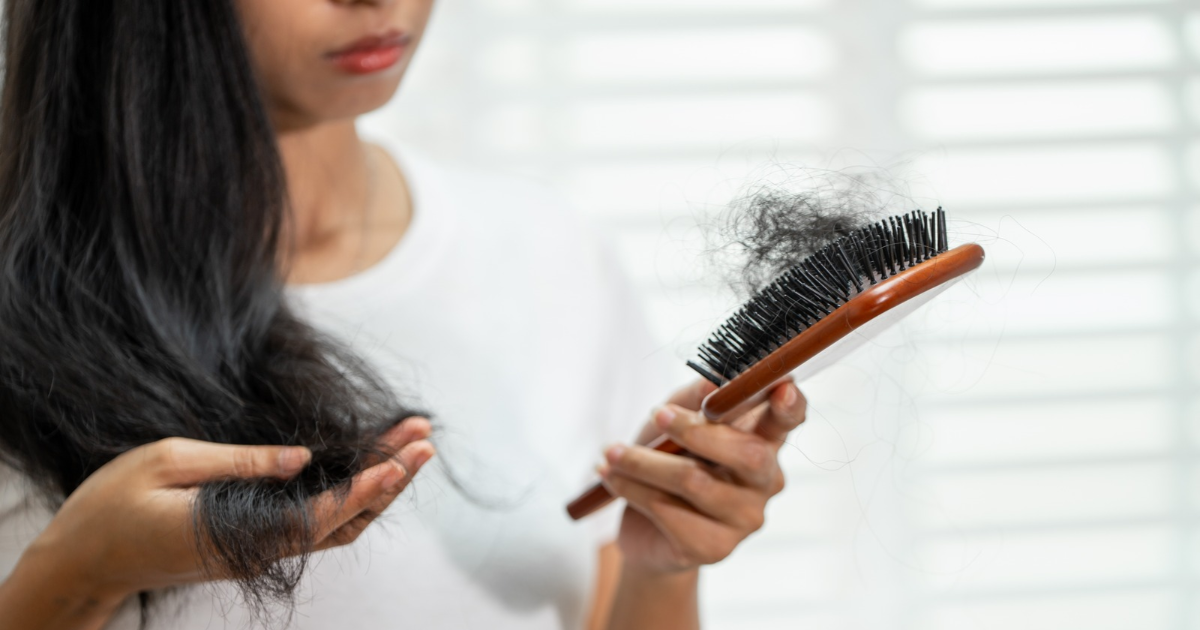
Some shedding is. According to the American Academy of Dermatology, losing 50 to 100 hairs a day is normal, which is why a few strands in the brush or shower drain don’t signal a problem.
A noticeable change is different. Pay attention to:
- A part that looks wider than it used to
- A ponytail that feels significantly thinner
- Visible scalp where you didn’t see it before
- Patches of loss, or shedding in clumps
Women often notice these changes months before seeking care, because hair loss can feel embarrassing or somehow “not medical enough” to bring to a doctor. It is medical. It is a symptom, the same as fatigue or pain, and it is very often treatable once the cause has a name.
What Causes Hair Loss in Women?
These are the causes specialists look for first, and the pattern of loss offers clues about which one is at work.
| Cause | Typical Pattern | Who Evaluates It |
| Thyroid disorders | Diffuse thinning across the whole scalp | Endocrinologist |
| Postpartum, menopause, PCOS | Diffuse shedding or male-pattern thinning | Endocrinologist |
| Iron deficiency | Diffuse thinning, often with fatigue | Primary care or endocrinologist |
| Nutritional deficiencies | Diffuse thinning | Primary care |
| Alopecia areata | Round, patchy areas of loss | Dermatologist |
| Female pattern hair loss | Widening part, thinning at the crown | Dermatologist |
| Medication side effects | Diffuse shedding after starting a drug | Prescribing provider |
Thyroid Disorders
Both hypothyroidism and hyperthyroidism can cause hair thinning. The thyroid regulates metabolism, and when it’s disrupted, hair follicle cycling is affected too. Thyroid-related hair loss is typically diffuse, involving the entire scalp rather than discrete patches, and regrowth is usual once the thyroid disorder is treated, though it takes several months. Hair loss is often the very symptom that leads to a thyroid diagnosis. A simple blood test (TSH, T3, T4) checks thyroid function, and PACT Endocrinology evaluates and treats thyroid-related hair loss.
Hormonal Changes: Postpartum, Menopause, and PCOS
Three of the most common chapters in a woman’s hormonal life can each affect hair:
- Postpartum shedding (telogen effluvium) is extremely common in the months after delivery, often peaking around four months, and it usually resolves on its own as fullness returns.
- Menopause brings a decline in estrogen that can produce gradual, diffuse thinning.
- PCOS (polycystic ovary syndrome) involves androgen excess, which can cause thinning in a male-pattern distribution along with other symptoms.
An endocrinologist can evaluate all three, and sorting out which hormonal shift is responsible changes what treatment looks like.
Iron Deficiency
Low iron is one of the most common and most overlooked causes of hair loss in women, particularly women with heavy periods. A ferritin level, which reflects stored iron, can identify depletion earlier than a standard blood count, and even borderline-low ferritin can affect hair growth. The encouraging part: once identified, iron deficiency is one of the most correctable causes on this list, through dietary changes and clinician-guided supplementation.
Nutritional Deficiencies
Deficiencies in vitamin D, zinc, biotin, and protein can each contribute to thinning. A basic blood panel identifies them, which matters because guessing at supplements without testing often means treating a deficiency you don’t have while missing the one you do.
Alopecia Areata
Alopecia areata is an autoimmune condition in which the immune system attacks hair follicles, causing round, patchy areas of loss. In some cases, it progresses to loss of all scalp hair (alopecia totalis) or all body hair (alopecia universalis). It also occurs more often in people with autoimmune thyroid disease, which is one reason thorough evaluation matters. Dermatologists treat alopecia areata, sometimes alongside rheumatologists.
Female Pattern Hair Loss
Androgenetic alopecia is the most common type of hair loss in women. It typically starts as a widening through the center part, with thinning concentrated at the top and crown while the front hairline stays largely intact. It’s linked to androgen sensitivity and family history, and it’s progressive, which makes early evaluation by a dermatologist worthwhile.
Medication Side Effects
Blood thinners, certain blood pressure medications, antidepressants, and chemotherapy drugs can all cause temporary hair loss. A medication review belongs in every hair loss evaluation, because the fix is sometimes as simple as an adjustment made with your prescriber.
Which Specialist Should I See for Hair Loss?
This is the question that stalls most women, so here is the plain answer:
- Endocrinologist, if thyroid dysfunction, PCOS, menopause, postpartum hormonal changes, or diabetes is the suspected cause. PACT Endocrinology evaluates hormonal hair loss from offices in Orange and Hamden.
- Dermatologist, for female pattern hair loss, alopecia areata, scalp conditions, or when hormonal causes have been ruled out. PACT Dermatology sees patients in Guilford, Orange, and Fairfield.
- Primary care provider, as a sensible first stop for the initial blood work (thyroid panel, iron and ferritin, vitamin D, CBC) and for determining the right referral based on results.
Some cases need more than one of these perspectives, and that’s normal rather than a sign of runaround. Hair loss sits at the intersection of hormones, nutrition, and the skin itself. PACT’s integrated network of specialists makes that coordination straightforward: blood work, endocrinology, and dermatology under one umbrella, with records that follow you.
When to Make the Appointment
A reasonable rule: if you’ve noticed thinning for more than two or three months, or the change is visible to you in photos or the mirror, it’s time. Make the appointment sooner if:
- Shedding came on suddenly or in clumps
- You see patches of complete loss
- Hair loss comes with fatigue, weight changes, irregular periods, or feeling cold or hot all the time, which point toward a hormonal cause
- You’re postpartum, and shedding hasn’t slowed by your baby’s first birthday
None of these mean something dire. They mean there’s likely a findable cause, and finding it early preserves more hair and more options.
FAQs: Hair Loss in Women
What causes hair loss in women?
The most common causes of hair loss in women are thyroid disorders, hormonal changes from postpartum shifts, menopause, or PCOS, iron deficiency, nutritional deficiencies, the autoimmune condition alopecia areata, female pattern hair loss, and medication side effects. Most cases have an identifiable cause, and blood work plus a specialist evaluation can usually find it.
Can thyroid problems cause hair loss?
Yes. Both an underactive thyroid (hypothyroidism) and an overactive thyroid (hyperthyroidism) can cause hair thinning, typically diffuse loss across the entire scalp rather than patches. Hair loss is often the symptom that leads to a thyroid diagnosis. A simple blood test checks thyroid function, and regrowth is usual once the thyroid condition is treated.
What vitamin deficiency causes hair loss?
Deficiencies in vitamin D, zinc, biotin, and protein can contribute to hair loss, and low iron, measured best by a ferritin level, is one of the most common deficiency-related causes in women. A basic blood panel identifies which, if any, applies to you, which is safer and more effective than guessing with supplements.
What causes sudden hair loss in women?
Sudden shedding is most often telogen effluvium, a temporary response to a trigger such as childbirth, illness, surgery, rapid weight loss, or significant stress, usually beginning two to three months after the event. Sudden patchy loss suggests alopecia areata instead. Both deserve evaluation, and both are far more manageable than the alarm they cause suggests.
Which doctor should I see for hair loss?
Start with your primary care provider for initial blood work, including a thyroid panel, iron and ferritin, and vitamin D. See an endocrinologist if the cause looks hormonal, such as thyroid disease, PCOS, or menopause, and a dermatologist for patchy loss, scalp conditions, or female pattern hair loss. Many women benefit from both perspectives.
Is hair loss in women treatable?
Very often, yes. Thyroid-related loss usually regrows with treatment, iron and nutritional deficiencies are correctable, postpartum shedding typically resolves on its own, and female pattern hair loss and alopecia areata have established treatment options a dermatologist can tailor to you. The common thread is identifying the cause first, which is what a specialist evaluation is for.
Get an Answer, Not a Shrug
Hair loss in women is more common, and more treatable, than most people realize, and it deserves a real evaluation rather than reassurance that it’s nothing. PACT Endocrinology evaluates hormonal causes of hair loss, from thyroid disease to PCOS and menopause, at offices in Orange and Hamden, with coordinated referrals across PACT’s Connecticut network when dermatology should be involved. Schedule a consultation today and start getting answers.